WayWord Books is Changing the Publishing Industry
Most people don’t know that the publishing industry is still doing business like it’s the Great Depression. Their business model allows bookstores to return inventory at any time, no questions asked, free of charge, regardless of the books’ condition.
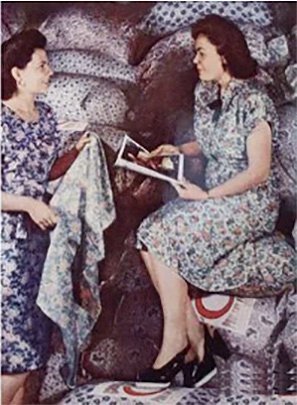
This was great for bookstores when people were wearing flour sack dresses and lining their shoes with newspaper, but the practice was always risky for publishers. And as for authors—no royalties got paid when books were returned.
In the 1930s, this arrangement was strictly between publishers and booksellers, but the arrival of big box stores half a century later forced the industry to be distributor-dependent.
Books are no longer sold directly, but must pass through a distributor who charges publishers sales commissions along with fees for inventory storage, shipping, returns, and pulping damaged books.
As these costs add up, it erodes publishers’ profits. Consequently, they take fewer risks and rely on established writers, while paying smaller advances and curtailing once lavish promotional budgets.
Add to the mix technological advances that make it possible for anyone with a computer to “publish,” and we have a market flooded with books of predictable, or worse, questionable quality.
These factors cheat readers and rob authors.
WayWord Books is working to find a better way—both for readers to gain access to great books and for writers to make a living creating them.
Our mission is two-part: offer readers something new by venturing off the beaten path, and uplift writers by paying royalties above industry standards.
Already, we’ve worked with printers and makers in Iceland, Canada, New York, and California; we’ve received queries from writers in Spain, Ireland, Brazil, India, and Ukraine; and we’ve curated surprisingly exquisite experiences.
For instance, our second offering, No Experience Necessary, Nancy Murray’s collection of essays describe her many (many) jobs, most of which were acquired without even a high school diploma. These essays had sat dormant for years, unpublished and collecting dust.
I first met Nancy in a memoir workshop when we were both working on our MFAs. Listening to her read, I thought she was in the wrong workshop. I truly believed she was writing fiction because there was no way one woman could have endured so much. But no, her stories were true, and a more resilient individual I have yet to meet. She is the modern-day version of the “Unsinkable Molly Brown” and an inspiration to all who encounter her work. How could her stories continue to waste away in a forgotten file? I had to publish them.
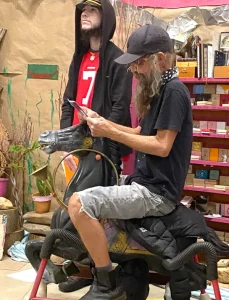 It was the same with the work of Theodore Archer Pope. My husband and I went to one of Ted’s readings in Asheville, North Carolina in 2022. He read one poem after another about the despair of writing, each one beginning with “I almost quit writing when…” At the end of each piece, he balled up the paper and threw it into the audience. My husband looked at me and said, “You have to publish this.”
Is Ted a crazy genius? A misunderstood prophet? Poet, artist, mystic? Though no single box can contain him, we attempt to do so with our third project, which is less a book than an experience. Where else can adventurous readers discover poetry presented as an exercise in quantum physics?
 The thrill of discovery drives us forward. Each day, we look for something new, different, knock-your-socks-off wonderful. Who knows where we’ll find it? It might be halfway around the globe, or in an office just down the hall. But when we do find it, we will nurture it with infinite care, and combine words, images, ideas, and artistry in ways that surprise and delight.
As a subscription-based publisher, we are breaking the mold by delivering quality, first-edition books directly to readers, eliminating the need for distributors, many of which earn far more than authors, and sometimes even more than publishers. Using a subscription-based business model we can eliminate nearly a third of the costs involved in getting writers’ work into the hands of readers. Those savings get transferred to writers’ royalties.
One of my favorite quotes about writing is:
“The book is a party the writer throws for the reader.”
You’re cordially invited to the party!
RSVP by subscribing today. Subscribe