
Today, 84% of Americans over the age of thirteen enjoy true crime. Though some literary historians say Truman Capote invented the genre in 1965 with In Cold Blood, its roots can actually be traced back to the sixteenth century.
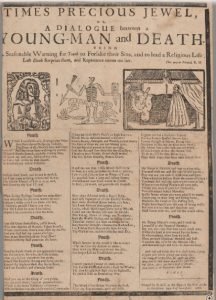
As early as 1550, British writers and balladeers capitalized on capital crimes, printing hundreds of “crime pamphlets”—short, unbound books of roughly 6 to 24 pages—detailing the gory circumstances surrounding the latest murders. Ballads that recounted the dastardly deeds in verse were printed on broadsides and posted around town.
 Fast forward to the twentieth century when Herbert Asbury, preceding Capote by several decades, uncovered the seamy side of seemingly civilized cities in books about Boston, Chicago, and New Orleans. Asbury’s true crime career kicked off with his story, “Hatrack,” published in H. L. Mencken’s American Mercury, in 1926. The story was about a prostitute who took her Protestant customers to the Catholic cemetery and her Catholic customers to the Protestant cemetery. Continuing in a similar vein, he recounted the murderous exploits of two more ladies of the evening—Mary Jane “Bricktop” Jackson and Bridget Fury—in The French Quarter, An Informal History Of The New Orleans Underworld.
The book also looked at pirates, gamblers, and voodoo, leading one to conclude Asbury’s use of the word “underworld” in his subtitle, can be construed both as a den of crime and also as a place where spirits of the dead linger.
Parts of New Orleans sit below sea level, meaning graves must be above ground. Cemeteries of raised tombs and Spanish moss-draped crypts conjure images of spirits and spells. NOLA’s burial practices gave rise to the tradition of the “jazz funeral,” filled with music and dancing. Some funerals have been known to last as long as a week!
Beginning at the house of the deceased, mourners follow a brass band playing a somber, slow-paced dirge. After the interment at the cemetery, the mood changes. The procession back to the house is accompanied by much happier music, celebrating the person’s life. People along the streets are encouraged to join the procession, forming the “second line.”