
It always takes me a few weeks into the new year before I fully adjust to writing the correct date on checks. (Now I’m dating myself; does anyone else still use those?) This year, as I get used to writing 2025, it dawned on me we’re a quarter past the 21st century.
It doesn’t seem that long ago when people were scared that everything from elevators to computers would crash when the clocks struck 12 and ushered in the year 2000. More than a few people spent months preparing for imminent disaster. There was a Doomsday countdown clock at our local post office. Neighbors grew their own wheat and had it milled because you know flour shortages were sure to follow computer outages (?); others stockpiled canned goods, and some ran 5Ks so they’d be fit enough to take the stairs.
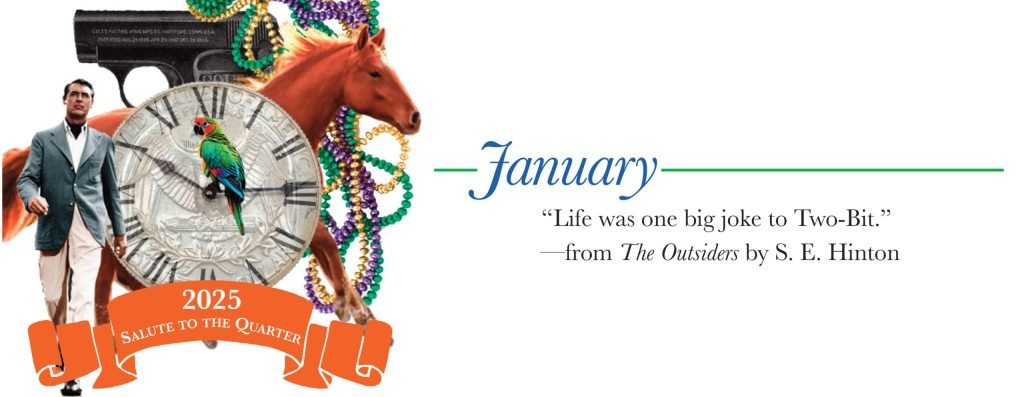
Here we are twenty-five years later, not unscathed, but hopefully wiser. It wasn’t clocks that brought the globe to a halt, but corona virus two decades later. Now, thankfully the pandemic is in the rear view mirror. and while we firmly focus on the future, it always pays to give a nod to the past. Today we’re kicking off our yearlong (and somewhat literary) salute to—drumroll here—the quarter.
“Life was one big joke to Two-Bit.”
– from The Outsiders by S. E. Hinton
As nicknames go, “Two-Bit” doesn’t embody much swagger. The term implies an insignificant amount—two-bits is the equivalent of a quarter—but the phrase does have a colorful history—from conquistadors to pirates to men in need of a shave.
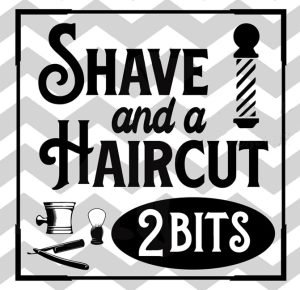 The term “two bits” has long been part of our popular vernacular. No doubt you’ve hollered “two bits, four bits, six bits a dollar…” at a pep rally or two, and who among us isn’t familiar with the jazzy seven-note refrain, “Shave and a hair cut – – two bits.”
The phrase “shave and a haircut” purportedly derives from Morse Code while the musical configuration can be traced back at least to 1899 and Charles Hale’s tune, “At a Darktown Cakewalk.”
Today, although the phrase is recognized around the globe, it has myriad meanings.
For example, in the Netherlands, it is used to describe someone who leaves with no intention of returning, but it is considered offensive in Mexico. Which is interesting because…
Today, although the phrase is recognized around the globe, it has myriad meanings. For example, in the Netherlands, it is used to describe someone who leaves with no intention of returning, but it is considered offensive in Mexico. Which is interesting because…
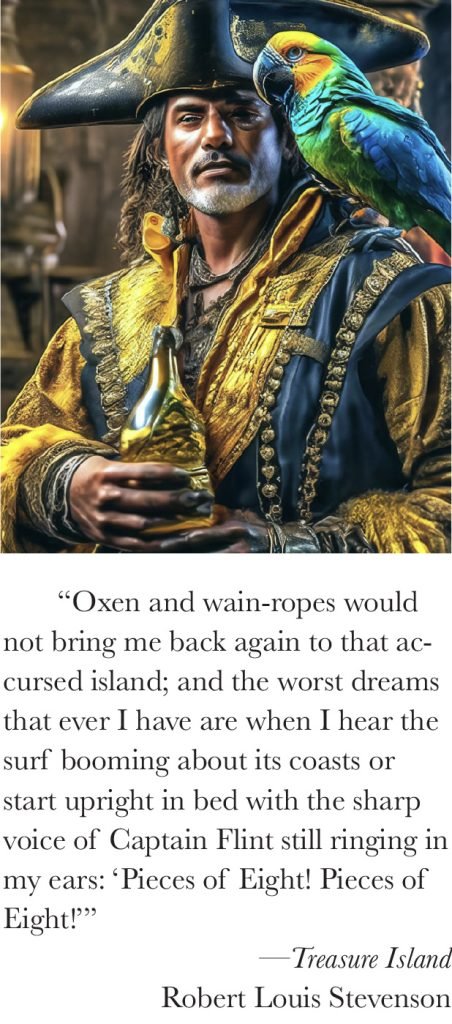
Long before the US was a country, even before we were thirteen colonies, Spanish conquistadors were busy plundering untold amounts of treasure. They amassed so much gold and silver in fact, a Spanish Royal Decree, issued September 14th, 1519, established the first foundry of the New World in what is now Mexico City. In April 1536, the first mint of the Americas started coining operations there.
For centuries, Spanish reales (silver coins) and escudos (gold doubloons) were the coinage of choice for most transactions. The renowned gold doubloon became an integral part of pirate lore.
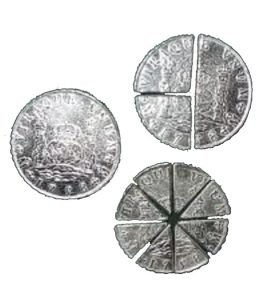
The most widely circulated of these coins were Spanish silver dollars, also known as “pieces of eight,” so dubbed because these coins were literally cut into eight equal parts, to make change. Each part was called a “bit.” Therefore, “two bits” was a quarter of a dollar, as it represented two of those eight parts.
Given that there was little silver or gold to be found in New England, British colonists relied on paper money—that is, until they attempted to finance a revolution. By 1780, their monetary system, i.e., Continental Currency, was deemed worthless, and their fallback was the Spanish-American reales.
Even after the Revolutionary War and the founding of the Mint in Philadelphia, Spanish dollars and US dollars were used interchangeably.
The eight-reales coin remained legal tender in the States until the Coinage Act of 1857 discontinued the practice. It’s difficult to pinpoint when the practice of cutting dollar coins into segments ended; there is evidence that it continued at least through the Civil War.
The US minted its own gold coins until the 1930s when FDR took the country off the gold standard in efforts to bring us out of the Great Depression.
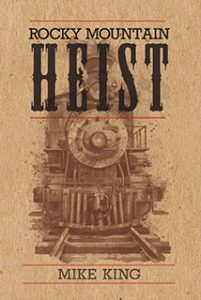
For a riveting tale about a shipment of golden Double Eagles from the Denver Mint and the freight conductor who “takes charge” of it check, out Mike King’s novel Rocky Mountain Heist.